
Beetle Shell-Inspired Coloration Technology
Coloration techniques inspired by the microscopic structures of beetle shells, creating vibrant colors without pigments.
Author and publication Date
- ColorMorph Technologies
Coloration techniques inspired by the microscopic structures of beetle shells, creating vibrant colors without pigments.
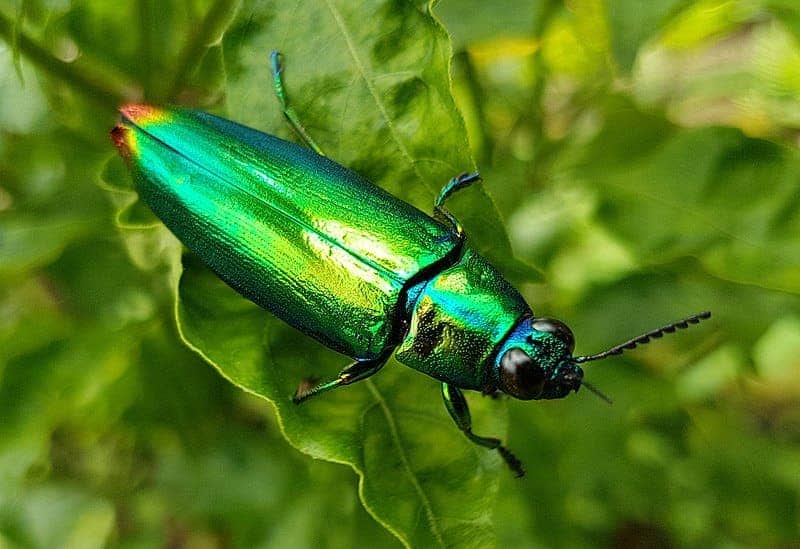
Beetle Shell-Inspired Coloration Technology
Coloration techniques inspired by the microscopic structures of beetle shells, creating vibrant colors without pigments.
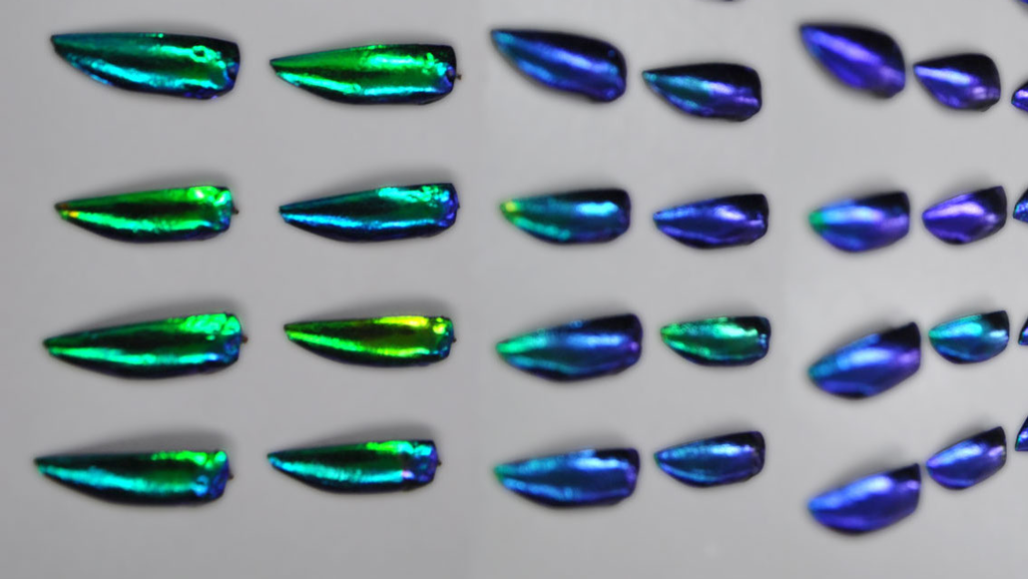
Beetle Shell-Inspired Coloration Technology
Many beetles exhibit brilliant, iridescent colors on their shells that are not the result of pigments but rather microscopic surface structures that manipulate light. These structures create color through the interference and diffraction of light, a phenomenon known as structural coloration. Inspired by this, researchers have developed materials that mimic the beetle's shell to produce vibrant, long-lasting colors without the use of chemical dyes or pigments. These biomimetic coloration techniques are applied in industries such as cosmetics, textiles, and automotive finishes, providing eco-friendly alternatives to traditional coloring methods. Structural coloration not only produces more durable and fade-resistant colors but also eliminates the environmental impact associated with synthetic dyes, making it a sustainable choice for manufacturers. By harnessing the principles of light manipulation found in beetle shells, these technologies offer a new way to achieve vibrant aesthetics with minimal environmental footprint.